Insights / Residences
Partitioning a room in a Bangkok condominium: walls, glass, sliding screens and what each costs
Dividing a Bangkok condominium costs ฿3,500 – 7,000 per square metre for a gypsum wall on steel studs, ฿9,000 – 18,000 per square metre for framed glass, and ฿6,000 – 12,000 per linear metre for a timber slat screen. Allow a further ฿15,000 – 40,000 to carry air conditioning and lighting into the new room. Most juristic offices permit lightweight partitions but refuse blockwork, and a sealed new bedroom needs its own return air path or it will be uncomfortable.
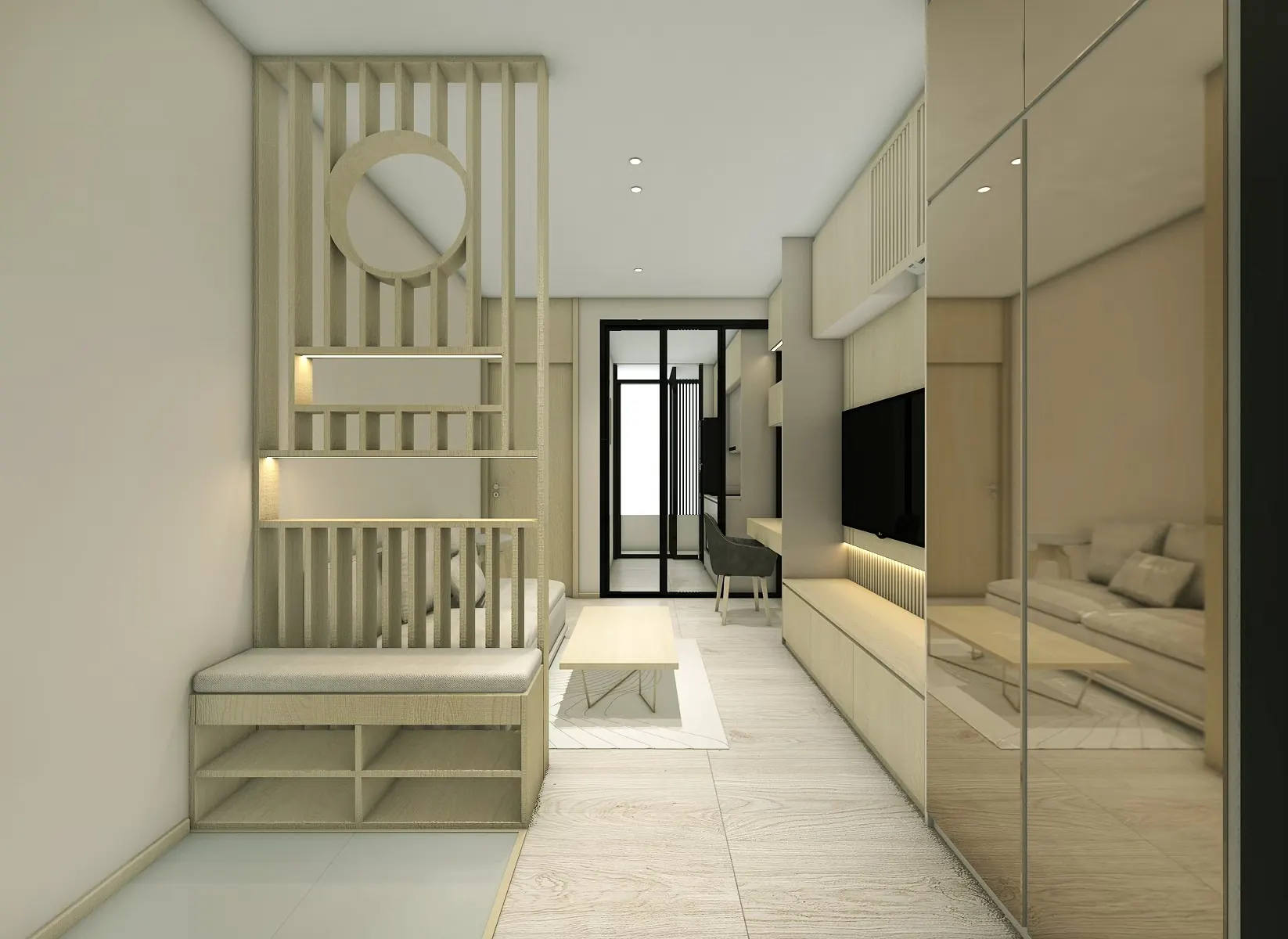
A one-bedroom flat that has to sleep two children, a studio that needs a home office, a living room with a bed at one end: dividing a room is the most requested small job in Bangkok, and it is the one most often done badly. The wall is the easy part. What makes the new room work is the air, the light and the sound.
What the building will let you build
Start at the juristic office, not the contractor. Almost every Bangkok condominium has the same three rules. Lightweight partitions only, because the slab was designed for a live load that brick would eat. No work on structural walls, columns or the façade. No touching the building's air conditioning risers or the fire sprinkler layout without the building engineer's sign-off.
Expect to submit a simple plan and section, a contractor's list of workers and identity documents, and a refundable deposit, typically ฿20,000 – 50,000. Approval takes one to three weeks. Working hours are normally 09:00 to 17:00 on weekdays, sometimes Saturday mornings, and noisy work is often restricted further.
The four ways to divide a room
| Method | 2026 cost | Sound | Best for |
|---|---|---|---|
| Gypsum on 75 mm steel studs, insulated | ฿3,500 – 7,000 per m² of wall | Good, 40 – 45 dB with two layers and rockwool | A real bedroom or an office with calls |
| Framed glass, steel or aluminium, clear or reeded | ฿9,000 – 18,000 per m² | Moderate, 28 – 33 dB single glazed | Keeping daylight in an interior room |
| Timber slat screen, floor to ceiling | ฿6,000 – 12,000 per linear metre | None, it is visual only | Entrances, dining areas, dressing corners |
| Sliding or pocket doors in a joinery wall | ฿25,000 – 60,000 per leaf | Moderate when closed with brush seals | Rooms used one way by day and another by night |
A 2.8 m high partition across a 2.6 m span is roughly 7 m² of wall, so ฿25,000 – 50,000 in gypsum and ฿63,000 – 126,000 in framed glass. Add the door: a flush door with frame and ironmongery is ฿12,000 – 25,000, a glazed pivot door ฿35,000 – 80,000.
Air conditioning is the decision that matters
A partition turns one conditioned volume into two, and the existing fan coil almost never serves both. There are three honest options.
Add a second unit. A 9,000 BTU wall unit with piping and a condensate run is ฿28,000 – 55,000 installed, assuming the outdoor unit has a place on the balcony. This is the only solution that gives the new room proper control.
Split the ducting. If the flat has a concealed unit, a branch duct and a second diffuser costs ฿15,000 – 35,000. Capacity is shared, so check the unit is not already undersized.
Leave the partition short. Stop the wall 300 mm below the ceiling, or use a slat screen or a transom of fixed glass. Air and light pass, sound does too. For a child's room this is often the right compromise; for an office it is not.
Whichever route, give the new room a return path. A sealed room with supply air and no return runs positive, the door sticks and the unit short-cycles. A 300 × 150 mm grille in the wall or a 15 mm gap under the door is enough.
Lighting, sockets and the ceiling
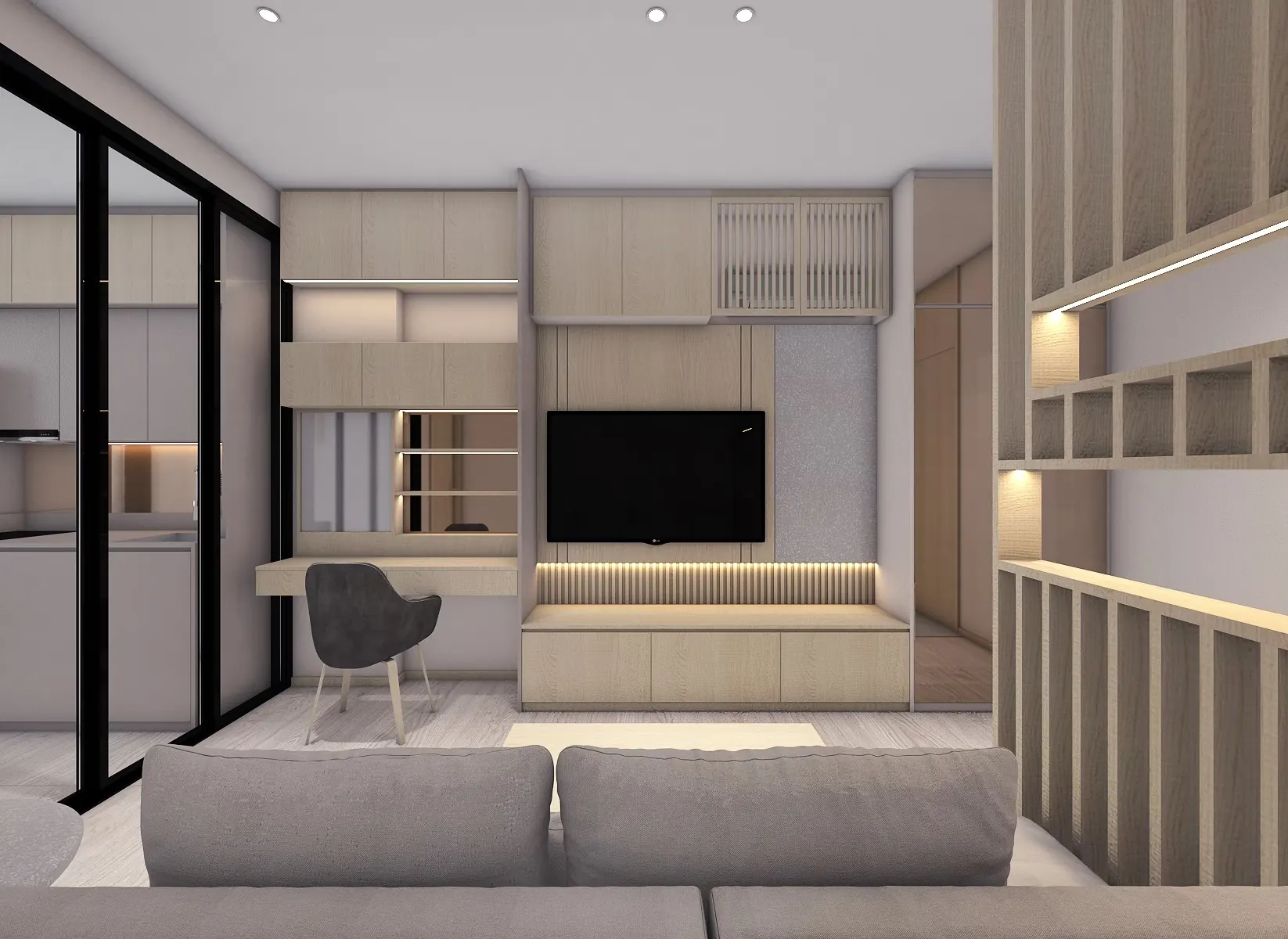
The existing ceiling was lit for one room. After the partition, expect one side to be dark and the other to have three switches for two lights. Budget ฿15,000 – 35,000 for new circuits, downlights and sockets, and do this while the studs are open. Rewiring after the boards are on costs three times as much and leaves patches that show under low-angle light.
Two details worth insisting on. Take the partition through the existing gypsum ceiling to the soffit if sound matters, because a wall that stops at the ceiling plane leaks conversation straight over the top. And set the switch for the new room inside it, not in the corridor, which is where the electrician will put it if nobody says otherwise.
When a partition needs more than the juristic office
Internal, non-structural, no change to the façade: the juristic person's approval is enough and no district office permit is required. A permit under the Building Control Act is needed if the work alters structure, changes the external appearance, adds or moves an opening in an external wall, or changes the use of the space. In practice that means a glass partition inside the flat is fine and a new window is not.
One last point specific to Bangkok towers. Check the sprinkler and smoke detector coverage before you draw the wall. A new room without a detector, or with a sprinkler head now behind a partition, will fail the building's annual fire inspection, and the juristic office will make you open the ceiling again to fix it.